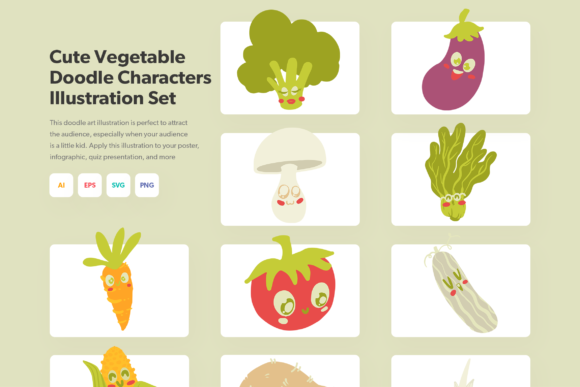
Vegetable Doodle Illustration Set
As a designer who spends half my day staring at hoop sizes and the other half worrying about stitch density, I approach every new embroidery file with a healthy dose of skepticism. The market is flooded with generic clip art that looks fine on a screen but falls apart under the needle. However, when I first pulled up the Vegetable Doodle Illustration Set, I didn’t just see another collection of produce graphics; I saw a potential solution for one of the most common requests in my inbox: cute, approachable nursery and kitchen decor.
The initial mood of this Illustrations pack is distinctly playful yet grounded. It avoids the overly chaotic energy of some cartoon styles, opting instead for a clean, hand-drawn aesthetic that feels like it belongs in a modern farmhouse or a minimalist boutique. For an embroidery project to succeed, the visual personality must translate from 2D vector space into 3D thread. In this case, the shapes are distinct enough to hold their structure during stitching but soft enough to feel inviting rather than rigid. This balance is crucial when you are trying to create a handmade product that appeals to parents looking for gentle, non-intimidating imagery for their children’s rooms.
Real-World Application: The Custom Tote Bag Scenario
To truly evaluate whether a design asset works, you have to put it to work. Let’s imagine a specific scenario: A client comes to me wanting a custom embroidered tote bag for a local farmers' market pop-up. They want something that celebrates fresh produce but doesn’t look like a grocery store logo. This is where the Vegetable Doodle Illustration Set shines.
I immediately visualized these doodles arranged in a scattered, organic layout across a canvas tote. Because the designs are simple line-art style illustrations, they lend themselves beautifully to machine embroidery design techniques that rely on negative space. Instead of heavy fill stitches that can make the fabric stiff and uncomfortable, I could use a combination of satin stitch outlines and sparse running stitch details to maintain the "doodle" feel. The result would be a lightweight, flexible tote bag design that feels high-end and artisanal.
This same logic applies to other apparel items. Imagine these vegetable motifs embroidered on the pocket of a denim jacket or centered on the chest of a heavyweight sweatshirt. The sweatshirt embroidery potential here is significant because the bold, simple lines cut through the texture of fleece or cotton blends without getting lost. For an Etsy seller or small shop product owner, this versatility means you can offer a single design concept across multiple price points—from a $5 keychain patch to a $40 premium tote.
Stitching Performance and Visual Clarity
When reviewing any digital embroidery file, my eyes go straight to the details. Can the machine handle the small curves? Will the stitch density cause puckering? The Vegetable Doodle Illustration Set appears to be designed with these technical constraints in mind. The lines are thick enough to be stitched clearly even on slightly textured fabrics, which is a common pitfall for beginners.
However, not every surface is created equal. If you plan to use this set on thin fabrics like voile or sheer curtains, you will need to be extremely careful with your stabilizer choice. Without proper support, the tension of the thread colors might distort the delicate loops of the doodle vegetables. Similarly, if you are attempting this on stretchy knit fabrics, such as those used for baby onesies or athletic wear, the design may require a tear-away or wash-away stabilizer to prevent shifting during the run.
One area that requires thoughtful execution is dark fabric. While the contrast of white or light-colored thread on black canvas can look striking, it demands precision. Any slight misalignment in the hoop size placement becomes glaringly obvious. I always recommend testing the design in a black-and-white mockup before committing to expensive thread. This step helps you verify that the shape remains recognizable purely through value contrast, ensuring that the final finished product has strong visual impact regardless of color choices.
Nursery and Kitchen Applications
Beyond apparel, this set is perfectly suited for home goods. Embroidered patches featuring these vegetables can be ironed onto aprons, making them excellent personalized gift options for housewarmings. The theme naturally aligns with cooking and health, which resonates well with families. Furthermore, using these designs on pillow covers or tea towels adds a touch of whimsy to kitchen decor. The Graphics within the set are varied enough to allow for thematic grouping—perhaps a "root vegetable" cluster or a "leafy green" arrangement—giving you creative freedom to curate specific moods for different customers.
Strategic Considerations for Sellers
For the craft business owner, the value of a design set lies in its adaptability and licensing clarity. Before listing any item made from the Vegetable Doodle Illustration Set, you must confirm the commercial license terms. Some creators allow unlimited sales of physical goods, while others restrict the number of units or prohibit resale entirely. Assuming the license permits commercial use, this set offers high perceived value. Customers associate detailed, professional-looking embroidery with quality, which builds trust and justifies higher price points.
Additionally, consider how this design fits into seasonal marketing. While vegetables are year-round themes, certain iterations (like pumpkins or leafy greens) can be repurposed for holiday-specific campaigns. This extends the lifespan of your inventory and keeps your printable mockup library fresh. When creating listings, highlight the handmade nature of the process. Buyers on platforms like Etsy are often looking for the human touch—the slight imperfections that prove a real person stitched the item. The doodle style complements this narrative perfectly, as it mimics the charm of hand-sketched art.
Practical Designer Notes for Execution
- Test on Scrap Fabric: Always run a test stitch on the exact fabric type you intend to sell. This reveals issues with thread tension or fabric distortion early.
- Check Stitch Density: Ensure the design isn’t too dense for the chosen fabric weight. Heavy density on light fabric causes visible pucker marks.
- Inspect Small Details: Zoom in on the smallest elements of the doodle. If they are thinner than the minimum recommended stitch length for your machine, they may not render correctly.
- Compare Backgrounds: Test the design against both light and dark backgrounds to ensure adequate contrast for readability.
- Use Proper Stabilizer: Match your stabilizer to the fabric’s stretch and weight. Incorrect stabilization is the #1 cause of failed embroidery projects.
- Verify Licensing: Double-check the usage rights before selling finished items or digital previews to avoid legal complications.
In conclusion, the Vegetable Doodle Illustration Set is a versatile and charming addition to any designer’s toolkit. It bridges the gap between cute aesthetics and technical feasibility, making it ideal for custom apparel, baby embroidery projects, and kitchen towel decorations. By paying attention to fabric selection, stabilizer use, and licensing details, you can transform these simple graphics into profitable, professional-grade commercial embroidery products that customers will love.