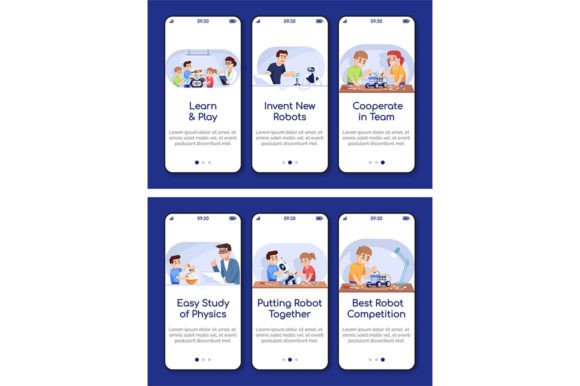
Robotics Courses for Kids Mobile App Set
As a designer who spends half my life staring at stitch charts and the other half worrying about thread tension, I don’t just buy designs; I evaluate them. I look for that elusive balance between visual appeal and technical viability. When I first pulled down the Robotics Courses for Kids Mobile App Set, my immediate thought wasn't about the code or the tech—it was about how this translates to thread. This is a Graphic Templates product type, specifically categorized under Graphics, which tells me we are dealing with digital assets meant to be adapted. But in the world of machine embroidery, adaptation is everything.
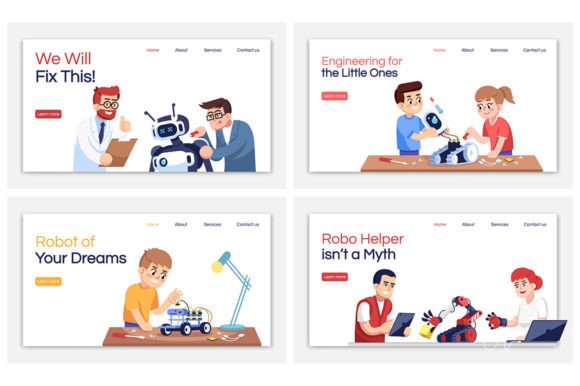
The concept here is clear: a mobile app interface featuring flat characters, likely representing a walkthrough or educational steps for an after-school robotics club. It’s modern, clean, and distinctly digital. My job is to determine if this digital-first aesthetic can survive the transition to fabric without losing its soul or causing stitching nightmares.
First Impressions and Visual Personality
The mood of this design set is undeniably contemporary. The "flat character" style mentioned in the description suggests a minimalist approach, which is actually a blessing for embroiderers. Flat styles tend to rely on strong silhouettes rather than intricate shading, meaning they often stitch up cleaner than overly detailed illustrations. However, the inclusion of a smartphone cartoon interface introduces geometric precision—straight lines, rounded corners, and small UI elements like buttons or icons.
Visually, it feels energetic and educational. It screams "STEM," "learning," and "future." For a handmade product, this adds a layer of perceived value. It’s not just a robot; it’s a narrative about education and technology. This makes it highly suitable for parents who want to encourage their children's interest in coding and engineering through tangible, wearable reminders. The visual personality is professional yet playful, striking a balance that appeals to both kids and the adults buying the gifts.
Real-World Application: From Screen to Stitch
Let’s talk about where this design actually lives. Imagine you are prepping inventory for an upcoming craft fair or updating your Etsy shop. You have a customer asking for a personalized gift for a nephew who loves building robots. A standard teddy bear patch is nice, but it’s generic. This embroidery file, when applied correctly, tells a story.
I see this design performing exceptionally well on specific items:
- Tote Bag Design: A canvas tote bag with this app interface embroidered on the front immediately signals a thoughtful, intellectual gift. It works as a school bag or a market tote for a young student.
- Sweatshirt Embroidery: Placing the smartphone graphic on the chest of a child’s hoodie creates a cool, urban look. The flat characters pop against the fleece texture, creating a nice contrast between the soft fabric and the structured digital design.
- Baby Embroidery: While less common for robotics, applying this to a onesie or burp cloth as a "future engineer" statement piece is a trending niche. The clean lines ensure it doesn't overwhelm the small garment.
- Embroidered Patch: If you are selling ready-made patches, this design offers high recognition. Parents will instantly identify the theme, making it an impulse buy at boutique shops.
The versatility extends to home decor as well. An embroidered pillow cover featuring the app interface could serve as nursery decor for a tech-savvy household, blending functionality with a modern aesthetic.
Technical Challenges and Where to Be Careful
No design is perfect, and as an experienced reviewer, I must highlight where this machine embroidery design might trip you up. The primary challenge lies in the "GUI smartphone" aspect. User interfaces are dense with information. Small buttons, thin text, and tiny icons can become illegible blobs of thread if not handled with care.
You need to be cautious when working with these constraints:
- Hoop Size Limitations: If the original vector is large, scaling it down to fit a small hoop (like 4x4 inches) may crush the details. Tiny UI elements might merge together, turning a sleek app screen into a muddy gray square. Always check the minimum viable size before committing to a garment.
- Fabric Texture: Smooth fabrics like polyester blends work best for maintaining crisp edges. On heavily textured fabrics like heavy denim or boucle wool, the fine details of the app interface may get lost. The thread might sink into the weave, blurring the distinction between the phone screen and the background.
- Stitch Density: A full-screen fill of a smartphone interface can result in a stiff, heavy patch. If the design uses too much fill stitch without adequate spacing, the fabric will pucker, especially on lightweight materials. You may need to reduce the density settings in your embroidery software to keep the project wearable.
- Curved Surfaces: Attempting to stitch this on a curved surface like a baseball cap is risky. The distortion caused by the curve will warp the rectangular shape of the smartphone, potentially making the UI elements look skewed and unprofessional.
Practical Designer Notes for Success
To ensure your finished product looks as good as the digital preview, follow these practical steps:
- Test on Scrap Fabric: Never run this directly onto your final garment. Use a scrap of the same material to test how the thread colors interact with the fabric. Dark backgrounds require bright, contrasting threads to make the app interface visible.
- Check Contrast in Black and White: Convert your design to grayscale in your digitizing software. This helps you see if the light and dark areas have enough separation to remain distinct after stitching.
- Inspect Small Details: Zoom in on the tiny icons. Are they recognizable? If they are too small, consider simplifying the design or removing unnecessary decorative accents to improve clarity.
- Use Proper Stabilizer: Because this design likely involves straight lines and precise shapes, a cut-away stabilizer is recommended to prevent shifting during the run. Hoop tension must be firm but not so tight that it distorts the fabric grain.
- Verify Licensing: Before listing this as a commercial embroidery item or selling it as a digital embroidery file, double-check the license terms provided with the Graphic Templates. Ensure you have the right to sell physical goods made from this design, especially if you are an Etsy seller or running a craft business.
Final Verdict on Value and Appeal
The Robotics Courses for Kids Mobile App Set is more than just a cute robot picture; it is a design asset that speaks to a specific, growing demographic. For small shop owners and creative entrepreneurs, it offers a way to tap into the STEM education trend without resorting to clichés.
When executed well, this design elevates the perceived value of the item. It looks intentional, modern, and high-quality. Customers trust brands that pay attention to detail, and a cleanly stitched app interface demonstrates that professionalism. It is particularly effective for personalized gifts because it connects emotionally with the recipient's interests.
However, success depends entirely on your digitizing skills. You cannot simply import and hoist. You must treat this as a design project that requires tweaking. Adjust the satin stitch widths, optimize the running stitch paths, and perhaps simplify the background to let the main character shine. If you do the work to adapt it properly, this template has the potential to become a bestseller in your handmade product line. It bridges the gap between digital culture and tactile craftsmanship, offering a unique selling point that stands out in a crowded marketplace.