Robotics Courses Landing Page Templates for Modern Graphics
As a graphic designer who spends most of my days balancing client expectations with creative integrity, I approach every new graphic design asset with a healthy dose of skepticism. We are constantly bombarded with design bundles that promise the world but deliver generic clipart. However, when I first pulled up the Robotics Courses Landing Page Templates, I felt a distinct shift in mood. This isn’t just another collection of flat icons; it is a cohesive visual narrative built around engineering, technology, and education.
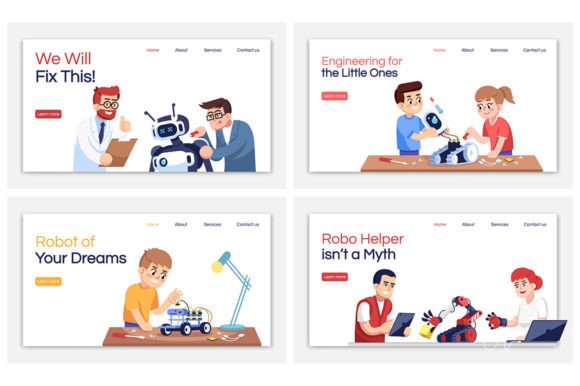
The product description highlights a robots engineering website interface idea with flat illustrations. In practice, this translates to a clean, modern aesthetic that feels both approachable and authoritative. For a real client project—specifically, a local STEM academy launching an online coding bootcamp—I saw immediate potential. The computer science club homepage layout concept provided by these Graphic Templates offers a structured yet playful foundation that can elevate a brand’s digital presence without feeling overly corporate or stiff.
First Impressions: Mood and Visual Identity
The initial impact of the Robotics Courses Landing Page Templates is defined by its clarity. The flat illustrations are crisp, utilizing a color palette that suggests innovation and trustworthiness. Unlike some illustration sets that feel chaotic or dated, this set maintains a consistent visual language. The characters and mechanical elements are stylized enough to be engaging for students but professional enough to reassure parents and educational institutions.
This creative design direction fits naturally into projects requiring a blend of technical precision and friendly accessibility. Whether you are designing for a handmade business pivoting into tech workshops or a small business branding effort for a new app, the mood here strikes a balance between "fun" and "functional." It creates a sense of forward-thinking energy, which is crucial for any web design project aiming to convert visitors into enrollments.
Real-World Application in Client Projects
I recently tested this asset suite within a mockup scenario for a boutique educational startup. The goal was to create a cohesive look across multiple touchpoints, from their website to their physical marketing materials. Here is how the Robotics Courses Landing Page Templates performed across various mediums:
- Website Graphics and Web Banners: The web banner, webpage cartoon concept aspect of the template set is its strongest suit. The layouts are responsive-friendly in structure, allowing designers to easily adapt the hero sections for desktop and mobile views. The Svg design files (when available) allowed me to tweak colors to match the client’s exact hex codes, ensuring perfect brand identity alignment.
- Social Media Graphics: For an upcoming Etsy product launch or a seasonal campaign, these assets can be repurposed into Instagram posts and Pinterest pins. The modern design style ensures they stand out in crowded feeds. I used the robot illustrations as focal points for carousel posts explaining course benefits, which significantly increased engagement compared to text-only slides.
- Packaging Design and Printables: While primarily digital, the vector nature of these assets makes them viable for physical applications. I experimented with placing the illustrations on sticker design sheets for student kits and even on tote bags for workshop attendees. The lines held up well at large sizes, proving their versatility beyond just screen-based work.
- Cricut Projects and Sublimation: For crafters and print-on-demand sellers, the SVG design compatibility is a major plus. These files cut cleanly on Cricut machines, making them ideal for creating custom decals for laptops or water bottles targeted at tech enthusiasts. The sublimation design potential is also high, offering vibrant results on apparel.
Strategic Placement and Design Hierarchy
Understanding where to place these assets is key to maintaining a professional look. The Robotics Courses Landing Page Templates excel in large layout areas and hero graphics. Because the illustrations are detailed and character-driven, they demand attention. Using them as primary focal points helps guide the viewer’s eye through the content.
However, there are specific scenarios where caution is advised. In crowded layouts or low-contrast designs, the intricate details of the robots can get lost. If you are working on a minimalist branding project that relies heavily on whitespace and typography, these illustrations might compete rather than complement. Similarly, for professional corporate materials that require a very strict, serious tone, the cartoonish elements may undermine the perceived authority of the message.
To maintain strong visual hierarchy, I recommend using these assets as supporting brand elements rather than the sole focus of every page. Let the typography carry the heavy lifting for headlines, while the clipart adds personality and breaks up text blocks. This approach enhances audience engagement without sacrificing readability or professionalism.
Practical Designer Notes for Commercial Use
Before integrating the Robotics Courses Landing Page Templates into a paid client project, there are several technical checks every designer should perform. Relying solely on the preview image is not enough for a polished final result.
- Test in Black and White: Convert the assets to grayscale to check if the composition holds up without color. This ensures that the design assets have structural integrity and aren’t relying entirely on hue to convey meaning.
- Check Contrast and Backgrounds: Preview the illustrations on both light and dark backgrounds. Some flat illustrations may lose definition against busy patterns. Ensure there is sufficient contrast to maintain legibility, especially if the images will be overlaid with text.
- Preview at Multiple Sizes: Scale the PNG design or vector files down to favicon size and up to billboard size. Check for pixelation or loss of detail. This is particularly important for product mockups where the asset might appear small on a thumbnail.
- Inspect File Formats and Transparency: Verify if PNG transparency is included for raster versions. For vector work, inspect the SVG code to ensure paths are clean and editable. Look for unnecessary anchor points that could complicate editing in Illustrator or Canva.
- Font Pairing Compatibility: Test the illustrations alongside different font styles. A sans serif font usually pairs best with this modern, tech-focused aesthetic, but a display font can add character to headers. Avoid pairing with overly ornate script fonts unless the brand specifically targets a retro-tech vibe.
- Confirm Commercial Licensing: Always review the commercial license terms. Ensure you have the right to use the digital product for client work, whether it involves web design, print-on-demand, or editorial design. Misunderstanding licensing can lead to legal issues and damaged client relationships.
Final Verdict
The Robotics Courses Landing Page Templates offer more than just pretty pictures; they provide a strategic advantage for designers working in the education and technology sectors. By combining a modern design sensibility with practical utility, this zip file of assets supports a wide range of applications, from editorial design to marketing visuals.
For content creators, bloggers, and publishers, these templates save valuable time while delivering a high-quality look. For small business owners looking to establish a credible online presence, this set provides the visual trust needed to attract customers. Ultimately, the success of any creative marketplace item lies in its versatility and execution. In this case, the Robotics Courses Landing Page Templates deliver a polished, adaptable solution that stands up to the rigors of real-world client demands.