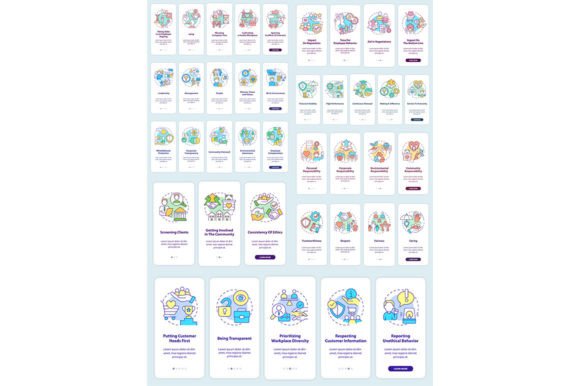
Review: Business and Banking Automation Apps
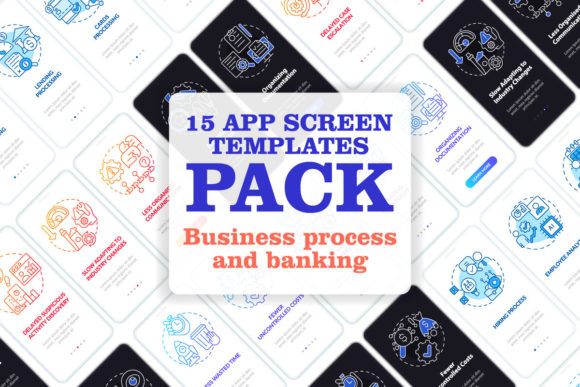
As a designer who spends half my day staring at screens and the other half threading needles, I have developed a healthy skepticism toward digital graphics that claim to translate well into physical form. We have all been there: you download a crisp, vector-perfect graphic template, excited to turn it into a handmade product, only to find that the intricate details dissolve into a muddy mess once the machine starts stitching. This is where the rubber meets the road. Today, I am putting Business and Banking Automation Apps under the microscope to see if this collection of UI/UX walkthrough steps actually belongs in your hoop or just on your hard drive.
The premise here is fascinating. We are taking the sterile, linear world of mobile app interfaces—specifically banking and business automation—and translating it into embroidery. At first glance, this seems like an odd pairing. Banking apps are about precision, security, and clean lines. Embroidery is about texture, thread tension, and organic movement. However, when executed correctly, the rigid geometry of a GUI (Graphical User Interface) can create a striking, modern aesthetic that stands out in a sea of floral and vintage designs. The key question is whether Business and Banking Automation Apps delivers on that promise without requiring a degree in engineering to stitch out.
First Impressions: The Mood and Visual Personality
When you first open the files for Business and Banking Automation Apps, the mood is undeniably corporate yet approachable. The design relies heavily on linear concepts and step-by-step graphics, which suggests a narrative flow. It isn’t just a static logo; it’s a story of efficiency. For the embroidery designer, this translates to a layout that likely favors clean paths over dense fills. This is a crucial distinction. Dense fill stitches can look heavy and overwhelming on garments, whereas the linear nature of these app screen sets allows for breathing room and visual clarity.
The use of Myriad Pro-Bold and Regular fonts adds another layer of consideration. Typography in embroidery is notoriously difficult. Thin strokes often break, and bold weights can become stiff. If this embroidery file retains the legibility of Myriad Pro across different fabric types, it is a significant win. The visual personality is professional, minimalist, and tech-forward. It feels less like a craft fair item and more like something you would see in a high-end boutique or a modern office space. This elevates the perceived value of the final piece, making it suitable for clients who want something that says "organized" and "sophisticated" rather than "cozy" or "rustic."
Real-World Application: From Screen to Stitch
Let’s talk about how this design performs in real-life scenarios. Imagine you are preparing a custom embroidered tote bag for a freelance financial consultant or a small business owner who prides themselves on efficiency. A standard floral tote might feel too generic. But a subtle, stylized representation of a banking automation workflow? That speaks directly to their identity. The Business and Banking Automation Apps graphic serves as a perfect conversation starter. It transforms a simple utility item into a branded statement piece.
This design also shines in the realm of personalized gifts for the tech-savvy entrepreneur. Think of a sweatshirt embroidery project for a startup founder or a laptop sleeve for a digital nomad. The linear concepts mimic the user journey, which is a clever way to embed meaning into the fabric. When a customer sees a series of stitched icons representing "login," "transfer," and "save," they recognize the rhythm of their daily work life. It creates an emotional connection through familiarity. For an Etsy seller, this is gold. It targets a specific niche—the organized professional—who is often underserved by traditional embroidery patterns.
Furthermore, consider the application on baby items. Yes, even banking apps can work for nurseries, but not in the literal sense. Instead, think of the color palettes and shapes. If the app interface uses soft pastels or muted tones, the geometric simplicity can double as early learning shapes. A pillow cover featuring the clean lines of a dashboard could serve as modern nursery decor, appealing to parents who prefer Scandinavian or minimalist aesthetics over traditional baby motifs.
Where Caution Is Required
However, no design is without its pitfalls, and Business and Banking Automation Apps has specific areas where an embroiderer must exercise care. The most critical factor is scale. These designs are based on mobile phone screens, which are inherently small. Translating this to a larger format requires scaling up, which can sometimes distort aspect ratios or make tiny elements lose definition. You must be vigilant when testing the design in smaller hoop sizes. Tiny lettering and fine detail corners may require a higher quality stabilizer and sharper needles to prevent puckering or loss of detail.
Fabric choice is equally important. Textured fabrics, such as heavy denim or chunky knits, can obscure the fine lines of a UI-inspired design. The contrast between the thread and the fabric background becomes paramount. On dark fabric, you will need to ensure your thread colors have enough brightness to pop, especially if the design relies on subtle gradients or light gray accents typical of modern app interfaces. Conversely, on light fabrics, dark threads might appear too harsh if not balanced with appropriate spacing.
Avoid using this design on curved surfaces like caps unless you are highly experienced with cap hoops and stabilization techniques. The linear nature of the app screens does not naturally conform to the curve of a hat brim or crown, potentially leading to distortion. Additionally, if you plan to sell finished products, remember that frequent washing can wear down fine details. A satin stitch border around complex shapes can help preserve the integrity of the design over time, adding both durability and a polished finish.
Practical Designer Notes for Success
To get the best results from Business and Banking Automation Apps, follow these practical steps before committing to your final product. First, always test the design on scrap fabric that matches the weight and texture of your intended material. This helps you gauge how the stitch density interacts with the weave. Second, review the thread colors carefully. Since the original graphic is likely digital, verify that the chosen thread palette maintains the intended hierarchy and contrast. A quick trick is to view your design mockup in black and white; if the elements blend together, adjust the thread shades for better separation.
Inspect small details closely. Are the arrows clear? Is the text legible at the scaled size? If you are creating an embroidered patch for a client's uniform, ensure that the edges are clean and that any internal holes are properly filled with fill stitch or running stitch to prevent fraying. Also, confirm the licensing terms. While this is categorized under Graphic Templates and Graphics, commercial use rights vary. Ensure you have permission to sell finished items made from this digital embroidery file, especially if you are marketing it as a unique small shop product.
Finally, think about the presentation. When you photograph your finished product, highlight the precision of the lines. Use lighting that emphasizes the texture of the thread against the fabric. This attention to detail reinforces the professionalism of the finished product and builds trust with potential buyers. Whether you are decorating apparel, creating home goods, or designing accessories, Business and Banking Automation Apps offers a fresh, modern angle that can set your work apart in a crowded marketplace. It is a smart choice for designers who want to merge functionality with fashion, provided they respect the technical nuances of bringing a digital interface to life in thread.