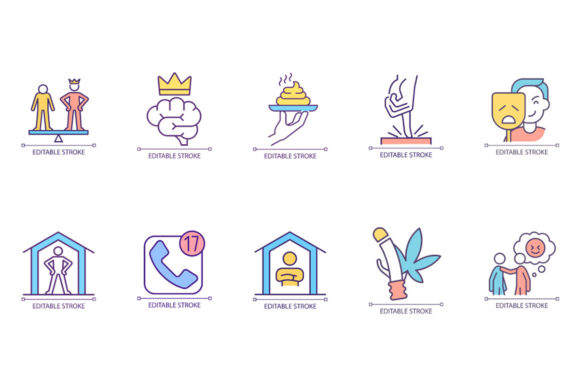
Emotional Manipulations RGB Color Icons
As a designer who spends more time than I care to admit staring at stitch density charts and debating thread color palettes, I approach every new asset with a healthy dose of skepticism. The market is saturated with clip art that looks great on a screen but falls apart under the needle. Recently, I evaluated a set called Emotional Manipulations RGB Color Icons, and I want to share my honest take on whether this collection belongs in your digital library or stays buried in your downloads folder.
The product description highlights that these are isolated vector illustrations with simple filled line drawings and editable strokes. At first glance, "simple" can be a double-edged sword in embroidery. Too simple, and the design lacks character; too complex, and it becomes a stitching nightmare. This particular set strikes a balance that is surprisingly effective for commercial use, particularly if you are looking to add a touch of psychological intrigue or modern minimalism to your handmade goods.
First Impressions and Visual Personality
When I opened the EPS files, the immediate takeaway was the clean geometry. The icons rely on strong shapes and clear negative space, which is crucial for machine embroidery. Because they utilize an Arial font for any text elements and feature editable strokes, there is a level of customization potential that many pre-digitized files lack. You aren't stuck with rigid parameters; you can tweak the stroke width to ensure the lines hold up during the stitching process without becoming muddy or merging together.
The mood created by these icons is distinct. They feel contemporary, slightly edgy, and definitely suited for a brand that wants to communicate emotion without being overly sentimental. For an Etsy seller or a small shop owner, this translates to products that stand out. Think less "cozy cottage core" and more "modern boutique." The RGB color aspect suggests vibrant potential, though in embroidery, we often translate these into specific thread choices. The visual personality here is confident and direct, making it ideal for customers who appreciate graphic design as much as craftsmanship.
Real-World Application: From Screen to Stitch
To truly judge an embroidery design, you have to imagine it on a finished product. I ran a mental simulation (and a quick test) of using Emotional Manipulations RGB Color Icons on various items. The most compelling scenario I found was for custom tote bags and sweatshirts.
Imagine a high-quality canvas tote bag featuring one of these icons centered on the front pocket area. The simple filled line drawing style works beautifully because it doesn't require excessive satin stitches that might pucker the fabric. It allows the texture of the canvas to show through, creating a hybrid aesthetic that appeals to the modern crafter. Similarly, on a heavyweight sweatshirt, these icons could serve as a minimalist chest logo. The clean lines provide a professional finish that elevates the garment from a basic piece of clothing to a statement item.
I also considered their application in baby items. While the concept of "emotional manipulation" sounds intense for a nursery, the execution is likely abstract enough to work as a subtle graphic on a bib or a onesie. If used sparingly, perhaps paired with soft pastel threads, it could add a clever, intellectual twist to baby apparel. However, caution is advised here. The theme needs to align with the target demographic’s sensibilities. For a general audience, it might be safer to reserve these designs for adult-oriented merchandise like aprons, kitchen towels, or pillow covers where the humor or artistic statement lands differently.
Commercial Viability and Branding
For the craft business owner, consistency is key. Using a cohesive set of graphics helps build brand recognition. If you are designing a line of holiday gifts or wedding favors, having access to a unified icon set ensures that your branding feels intentional rather than cobbled together. These icons fit well within the realm of commercial embroidery projects, provided you have the proper licensing rights.
The versatility extends to digital assets as well. Even if you are primarily a physical product seller, having high-quality vector sources allows you to create stunning printable mockups. A crisp digital preview of how an embroidered patch will look on a denim jacket can significantly boost conversion rates on your Etsy listing. The clean nature of these graphics means they scale well for social media posts, allowing you to showcase your handmade product with clarity and professionalism.
Technical Considerations and Potential Pitfalls
No design is perfect for every situation, and Emotional Manipulations RGB Color Icons is no exception. There are specific scenarios where you need to exercise extreme caution.
- Small Hoop Sizes: If you attempt to stitch these icons in a very small hoop, the details may become indistinguishable. Embroidery machines struggle with fine lines when the total area is tiny. Always check the smallest dimension of the design against your machine's minimum viable stitch area.
- Textured and Stretchy Fabrics: While the simple line work is generally forgiving, textured fabrics like chunky knits or heavy wools can obscure the clean edges of the icons. Stretchy fabrics require a sturdy stabilizer to prevent distortion, which can warp the geometric precision of the design.
- Dense Stitch Areas: Although described as simple, some icons may contain dense fill areas. High stitch density can lead to stiffness in the finished fabric, which is undesirable for items like baby clothes or delicate scarves. Review the stitch count carefully before committing to a final production run.
- Curved Surfaces: Applying flat icon designs to curved surfaces like caps or sleeves requires careful digitizing or placement techniques. Without proper easing, the straight lines of the icons may buckle or look misaligned.
Practical Designer Notes for Success
Before you upload these files to your embroidery machine, follow these practical steps to ensure a successful outcome:
- Test on Scrap Fabric: Never assume a design will work perfectly on your final material. Stitch a test version on a scrap piece of the same fabric type to check for puckering, tension issues, or detail loss.
- Check Thread Contrast: The effectiveness of a simple line drawing relies heavily on contrast. Ensure your chosen thread colors stand out clearly against the background fabric. Low-contrast combinations can make the design disappear after stitching.
- Review Stitch Density: Look closely at the file structure. If possible, simulate the stitching in your software to identify any areas that might be too dense or sparse. Adjusting the stitch length or type (e.g., switching from a dense fill to a running stitch outline) can improve the final look.
- Confirm Licensing: Since you intend to sell finished items or use these in digital product previews, verify the license terms associated with the EPS files. Commercial use permissions vary widely, and ensuring you have the right to sell physical goods made from these designs is critical for protecting your business.
- Inspect Small Details: Zoom in on the vector file. Are there any tiny anchor points or overlapping paths that might cause the machine to jump unnecessarily? Cleaning up minor artifacts in your vector editing software before converting to an embroidery format can save you hours of troubleshooting.
In conclusion, Emotional Manipulations RGB Color Icons offers a solid foundation for designers seeking modern, clean aesthetics for their embroidery projects. It is not a one-size-fits-all solution, but with careful consideration of fabric choice, hoop size, and thread selection, it can produce impressive results. Whether you are creating personalized gifts, expanding your Etsy seller inventory, or adding unique touches to client orders, this set provides the flexibility and visual appeal needed to elevate your work. Just remember: the best embroidery comes from thoughtful preparation and respect for the medium.