Conduct Disorder Concept Icons Bundle: Graphics and Icons for Mental Health Content
As a digital publisher who has spent years refining the visual identity of content websites, I know that trust is built on clarity. When readers land on a page discussing sensitive topics like mental health, they are looking for authority, empathy, and polish. A cluttered or amateurish design can inadvertently undermine the credibility of even the most well-researched article. This is where the right graphic design asset becomes more than just decoration; it becomes a tool for communication.
I recently evaluated the Conduct Disorder Concept Icons Bundle with a specific workflow in mind: preparing editorial content for a niche blog focused on psychology, parenting resources, and therapeutic education. The goal was to enhance blog graphics for featured images, Pinterest pins, and downloadable lead magnets without distracting from the core message. Here is my review of how this asset performs in a real-world publishing environment.
First Impressions and Editorial Mood
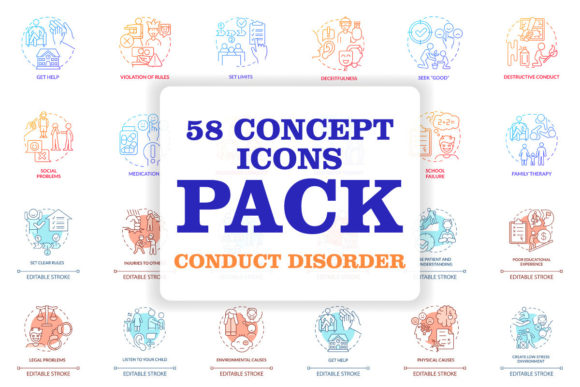
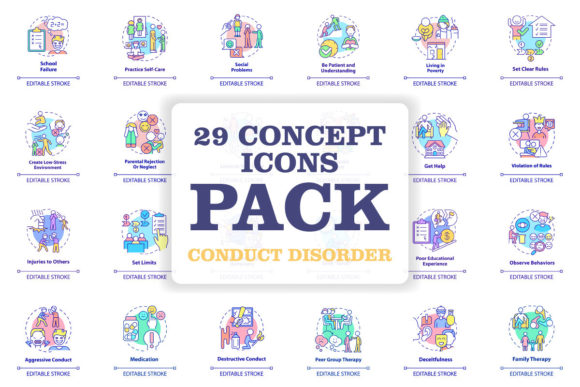
The moment you open the bundle, the aesthetic is immediately apparent. These are not playful, cartoonish symbols, nor are they overly clinical and cold. Instead, the Conduct Disorder Concept Icons Bundle strikes a balance between professional seriousness and approachable modernity. The style relies on thin line color illustrations, which creates a sense of lightness and openness—a crucial factor when dealing with heavy subjects like diagnosis and treatment.
The use of isolated symbols ensures that each icon can stand alone or work within a grid system without visual noise. For an editor or designer, this means you have control over the narrative. You can highlight specific aspects of conduct disorder—such as impulsivity, aggression, or rule-breaking—without introducing unrelated imagery. The mood is educational and supportive, making it ideal for content that aims to inform parents, educators, or individuals seeking help. It feels clean, modern, and distinctly professional, which helps establish immediate reader trust.
Integrating Icons into Your Publishing Workflow
In my daily routine, I constantly look for assets that save time while elevating quality. This bundle fits seamlessly into several key areas of content creation:
- Pinterest Pins and Social Media Previews: Visual hierarchy is everything on social platforms. Using these icons as focal points in your Pinterest pin designs draws the eye and communicates the topic instantly. Because the strokes are editable, you can adjust the color palette to match your brand’s brand identity perfectly.
- Article Headers and Featured Images: Instead of relying solely on stock photography, which can sometimes feel generic, combining text overlays with these graphics creates a unique editorial look. They serve as subtle accents that guide the reader’s eye toward the headline.
- Digital Guides and Lead Magnets: If you are creating a downloadable PDF checklist or a digital guide on managing behavioral challenges, these icons break up dense text. They act as visual anchors, making long-form content easier to scan and digest.
- Newsletter Banners: Consistency builds loyalty. Using the same icon set across your email headers and website creates a cohesive web design experience that reinforces your content marketing strategy.
Supporting Content Performance and Trust
Why does this matter for your bottom line? Because polished visuals directly impact click-through rates and engagement. When your editorial design looks intentional, readers perceive your information as more credible. The Conduct Disorder Concept Icons Bundle supports this by providing a consistent visual language.
Furthermore, the ability to edit the stroke width allows for better visual hierarchy. You can make primary concepts bolder and secondary details finer, guiding the user’s attention exactly where you want it. This level of control is essential for affiliate marketing content, where you need to clearly distinguish between problem statements and solution-oriented calls to action. A strong brand identity built on clean, thoughtful design assets reduces bounce rates and encourages deeper exploration of your site.
Where This Asset Shines
This bundle is particularly effective in contexts that require clear, symbolic representation of abstract concepts:
- Hero Images: Placing a large, isolated symbol next to a compelling headline creates a powerful first impression.
- Category Thumbnails: On a blog archive page, distinct icons help users quickly identify different sections of your site, improving navigation and user experience.
- Editorial Accents: Use small icons to bullet-point lists or highlight key takeaways within an article body.
- EBook Covers: For those selling printable design resources or courses, these icons add a layer of sophistication that justifies a premium price point.
Areas Requiring Careful Consideration
No single asset is perfect for every scenario. While this bundle is versatile, there are limitations to keep in mind:
- Small Mobile Thumbnails: Thin line art can become illegible when scaled down too far. Always test your icons at 50x50 pixels or smaller to ensure they remain recognizable.
- Low-Contrast Backgrounds: Because the lines are delicate, they may get lost on busy or low-contrast backgrounds. Ensure sufficient contrast ratios for accessibility.
- Serious Professional Niches: While the icons are professional, the "color illustration" aspect might be too soft for highly technical medical journals or corporate compliance training materials that demand stark, monochrome minimalism.
Practical Publisher Notes for Implementation
To get the most out of the Conduct Disorder Concept Icons Bundle, follow these practical steps during your production process:
Test Across Devices: Preview your designs on both desktop and mobile screens. What looks balanced on a wide monitor might feel cramped on a smartphone.
Check Typography Pairings: The bundle mentions the use of Roboto-Medium and Myriad Pro-Bold fonts. When pairing these with your own text, try placing the icons beside serif fonts for a classic editorial look, or sans-serif fonts for a modern tech vibe. Avoid mixing them with overly decorative script fonts unless you are aiming for a very specific artistic effect.
Optimize for Web Performance: Review file sizes before uploading. Compress your images properly to maintain fast load times, which is critical for SEO and user retention.
Verify Licensing: Before using these commercial design elements on monetized websites, affiliate pages, or paid products, confirm your commercial license allows for such usage. Most creative marketplaces provide clear guidelines, but double-checking protects your business.
Final Verdict
The Conduct Disorder Concept Icons Bundle is a high-quality digital download that offers significant value for bloggers, designers, and publishers in the health and wellness space. Its clean, editable nature allows for deep customization, ensuring that your creative design remains unique and aligned with your small business branding. By integrating these icons and graphics into your workflow, you elevate the perceived value of your content, foster greater reader trust, and create a more engaging, professional online presence. For anyone serious about editorial design in the mental health niche, this is a worthwhile addition to your toolkit.